Generating enquiries is relatively easy. Generating enquiries from people who are genuinely interested in your services, understand your offering, and are ready to take the next step is a different challenge.
For service businesses, lead generation is not simply about getting more people to fill out a contact form. It is about attracting the right audience, building trust, and creating a predictable journey from initial interest to a qualified sales opportunity.
Whether you run a real estate consultancy, an interior design company, a financial services firm, or a professional consultancy, Google Ads and Meta Ads can play important roles in your lead generation strategy.
However, both platforms work differently.
Google helps you reach people actively searching for solutions, while Meta helps you introduce your services and generate interest among relevant audiences.
The strongest digital advertising strategy uses both platforms strategically.
Understanding Google Ads vs Meta Ads for Lead Generation
Before launching campaigns, it is important to understand what makes each platform useful.
Google Ads: Reaching People With Existing Intent
Google Ads allows businesses to appear when potential customers search for specific services.
For example, someone searching for “interior designers in Bangalore” is already exploring a particular service.
A well-structured Google Ads campaign can help your business appear at the right moment, when that person is actively looking for a solution.
Google Search campaigns are particularly useful for service businesses with clearly defined offerings and audiences who regularly search for them.
Meta Ads: Creating Awareness and Generating Interest
Meta Ads work differently.
People browsing Instagram and Facebook may not be actively looking for a service. However, they can still be interested in one if the right message reaches them.
Meta allows businesses to reach audiences based on available demographic, interest, behavioural, and first-party audience signals.
For example, an interior design company could showcase completed projects, design transformations, and customer experiences to attract people who may be considering a home renovation.
This makes Meta particularly useful for visual storytelling, brand awareness, and lead generation.
1. Define What a Quality Lead Looks Like
Before investing in advertising, establish what makes an enquiry valuable to your business.
Not every lead has the same potential.
For a real estate consultancy, a qualified lead might be someone with a defined budget, preferred location, and purchase timeline.
For an interior design company, it could be a homeowner with a confirmed project requirement and a realistic budget.
Define your ideal customer based on:
- Location.
- Budget.
- Specific service requirement.
- Project size or scope.
- Purchase or decision timeline.
- Business or personal requirements.
This helps you build campaigns around actual business opportunities rather than chasing large enquiry numbers.
Ready to attract high-quality leads and grow your business?
Let Mavendoer turn your Google and Meta Ads into measurable business results.
2. Build Separate Google Ads Campaigns Around Search Intent
One of the most important aspects of Google Ads for lead generation is keyword selection.
Your keywords should reflect what potential customers are actively searching for.
For example, an accounting consultancy could target:
- Accounting services for small businesses.
- Tax consultant in Singapore.
- Business accounting services.
- Corporate tax filing services.
Avoid grouping unrelated services into a single campaign.
Instead, create separate campaigns or ad groups for different service categories and search intentions.
This allows you to write more relevant advertisements and direct visitors to the right landing pages.
Use negative keywords to reduce irrelevant traffic and regularly review search terms to understand what people are actually looking for.
3. Use Meta Ads to Build Demand and Generate Enquiries
Meta Ads can help service businesses reach people who may not yet be actively searching for their services.
The key is to communicate the problem you solve.
Instead of creating advertisements that simply say “Contact Us for Our Services”, focus on customer challenges.
For example:
An interior design company could use a short video showing how an underutilised space can be transformed.
A business consultancy could explain common operational challenges faced by growing companies.
A real estate advisory could showcase the factors buyers should consider before investing in a property.
Use different creative formats, including Reels, static advertisements, carousels, and lead generation forms.
Your creative should make the service relevant before asking the audience to enquire.
4. Create Landing Pages That Match Your Advertisements
Getting someone to click an advertisement is only the beginning.
What happens after the click is equally important.
If your advertisement promotes a specific service but directs visitors to a generic homepage, the experience can feel disconnected.
Create dedicated landing pages for individual services or campaigns.
An effective landing page should include:
- A clear headline explaining the service.
- The problem your business solves.
- Your key offerings.
- Benefits and differentiators.
- Relevant testimonials or case studies.
- A clear enquiry form.
- A prominent call to action.
Keep the page focused on one primary conversion objective.
The fewer unnecessary distractions visitors encounter, the easier it becomes for them to take action.
5. Use Lead Forms Strategically
Both Google and Meta offer different ways to capture enquiries.
Meta Instant Forms allow users to submit their details without leaving the platform. Google Ads also supports lead form assets for eligible campaigns and advertisers.
These formats can reduce friction, but they may sometimes attract people who are less committed than visitors who complete a detailed website enquiry.
To improve lead quality, ask relevant qualifying questions.
For example:
- What service are you interested in?
- What is your approximate budget?
- When do you plan to start?
- Which location are you based in?
Keep forms concise. Ask only what your sales team genuinely needs to qualify the enquiry.
6. Use Retargeting to Reconnect With Interested Visitors
Many people won’t enquire during their first interaction with your business.
They may visit your website, explore your services, watch a video, or engage with your social media content before leaving.
Retargeting allows you to reconnect with these audiences.
Consider creating separate campaigns for:
- Website visitors.
- People who viewed specific service pages.
- Instagram and Facebook engagers.
- Video viewers.
- People who opened but did not submit a lead form, where eligible.
Use these advertisements to address common concerns, showcase customer experiences, and provide additional reasons to enquire.
7. Test Different Creatives and Advertising Messages
A single advertisement rarely works equally well for every audience.
Experiment with different messaging angles to understand what generates better-quality enquiries.
For example, a professional consultancy could test:
Problem-focused: Struggling to manage your business finances?
Solution-focused: Simplify your financial operations with expert support.
Expertise-focused: Get guidance from professionals who understand your industry.
Outcome-focused: Make more informed business decisions with the right financial strategy.
Test different visuals, headlines, formats, and calls to action.
However, avoid changing too many campaign elements simultaneously. Structured testing makes it easier to understand what is actually driving results.
8. Track Leads Beyond the Initial Enquiry
One of the biggest mistakes businesses make is measuring advertising success only through form submissions.
A campaign that generates 100 enquiries but only two qualified prospects may be less valuable than one that generates 25 enquiries and ten genuine sales opportunities.
Track what happens after someone submits a form.
Important metrics include:
- Cost per lead (CPL).
- Qualified lead rate.
- Cost per qualified lead.
- Appointment or consultation bookings.
- Lead-to-customer conversion rate.
- Customer acquisition cost (CAC).
- Return on advertising spend.
Integrate your advertising platforms with a CRM wherever possible. This helps your team understand which campaigns generate actual business rather than simply more enquiries.
9. Improve Lead Follow-Up and Response Time
Even a well-planned lead generation strategy can underperform if enquiries are not handled promptly.
Once a person submits their details, establish a clear follow-up process.
This could include:
- An automated confirmation message.
- A prompt call or email from your sales team.
- A qualification conversation.
- A scheduled consultation.
- Follow-up communication for undecided prospects.
Ensure that your sales and marketing teams work together.
Marketing should understand which leads become customers, while sales should communicate the quality and relevance of incoming enquiries.
This feedback can help improve targeting and campaign messaging.
Google and Meta Ads: Why a Combined Strategy Works
Google and Meta Ads should not necessarily compete for your advertising budget. They can support different stages of the customer journey.
Google captures existing demand by reaching people actively searching for services.
Meta helps build awareness, introduce solutions, and bring potential customers into your sales funnel.
For example, a professional services business could use Meta to showcase its expertise and customer success stories, while Google Search campaigns capture people actively looking for that service.
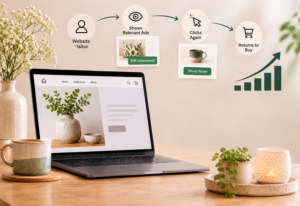
Retargeting can then reconnect with visitors who have interacted with either channel.
This creates a more connected lead generation strategy rather than relying on one platform alone.
Turning Advertising Spend Into Business Opportunities
Successful lead generation requires more than launching advertisements and increasing budgets.
It involves understanding your audience, identifying search intent, creating relevant messaging, building effective landing pages, and tracking the quality of every enquiry.
For service businesses, the objective should always be to generate leads that have a genuine potential to become customers.
At Mavendoer, we combine performance marketing, creative strategy, audience insights, and conversion-focused digital experiences to help businesses reach the right people and make their advertising investments work harder.
More leads are not always better. Better-qualified leads are what move a business forward.